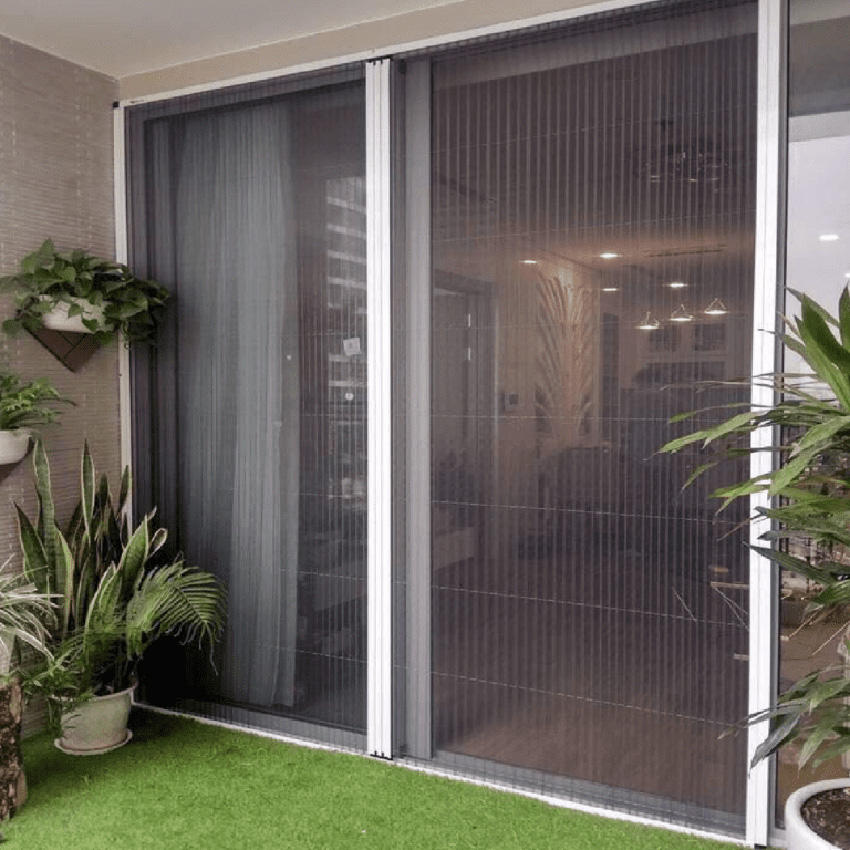
Walk into any American hardware store and you will see screens that look nearly identical. The frames are similar, the mesh is fine, and the prices differ by a few dollars. But the mesh inside those screens is not the same, and the difference determines how long the screen lasts, whether it survives a cat, and whether it actually keeps pollen out of your bedroom.
Most residential screens in the US use fiberglass mesh with an aluminum frame. It is the default for a reason: affordable, rust-resistant, and good visibility . But fiberglass has a weakness that matters for pet owners and allergy sufferers — it tears under claws and its standard 18x16 weave is too open to stop pollen or no-see-ums .
This guide compares the four mesh types American homeowners actually choose between, so you can match the mesh to the room instead of guessing.
The Four Mesh Types That Matter Fiberglass Mesh: The Default Fiberglass is used in roughly 80% of residential screens in the US . It consists of woven glass fibers coated in vinyl, which gives it flexibility and weather resistance.
Strengths: Cheapest option, rust-proof, excellent visibility because the strands are fine, and flexible enough to resist denting.
Weaknesses: Low puncture resistance. A cat’s claw or a sharp object will tear it. It also stretches over time, especially in large screens .
Best for: Rental apartments, windows in rooms without pets, and anyone who wants a basic, affordable screen.
Aluminum Mesh: The Traditional Metal Aluminum was the standard before fiberglass took over in the 1960s and remains common today, especially in garage and workshop windows .
Strengths: Far more durable than fiberglass. It resists tears and punctures, maintains tension without sagging, and is fire-resistant — a relevant advantage in wildfire-prone areas .
Weaknesses: Reduced visibility because the metal strands are thicker. It dents and creases permanently from impacts. In coastal areas, salt air can corrode it unless coated .
Best for: Garage windows, workshops, basement windows, and any location where durability matters more than a clear view.
Pet Screen (Vinyl-Coated Polyester): The Pet Owner’s Upgrade Pet screen is made from heavy-duty polyester strands coated in vinyl. Manufacturers claim it is about seven times stronger than standard fiberglass .
Strengths: Resists tears and punctures from pets scratching, jumping, or pressing against the screen. It also resists stretching better than fiberglass.
Weaknesses: Slightly reduced visibility compared to fiberglass, and a 50–75% cost premium . A determined cat can still eventually damage it, though it lasts far longer than fiberglass.
Best for: Homes with cats or dogs that push against screens, but where the budget does not stretch to stainless steel.
No-See-Um Mesh: The Fine-Weave Specialist No-see-um mesh uses a much tighter weave — typically 20x30 or finer — to block the tiny biting midges, gnats, and sand flies that pass through standard 18x16 screens . The University of Florida’s extension service recommends 20x20 mesh or finer specifically for no-see-um protection .
Strengths: Blocks insects that standard screens cannot. Essential in coastal Florida, the Gulf Coast, and wooded areas where no-see-ums make outdoor spaces unusable.
Weaknesses: Reduces airflow by 20–30% compared to standard mesh, and costs 40–60% more . The tighter weave also reduces visibility slightly.
Best for: Coastal homes, lake houses, and any property where tiny biting insects are a seasonal problem.
A Note on Solar Screens Solar screens are not a separate mesh material — they are a category of screen designed to block heat, UV, and glare. They use a denser weave and often a darker color to absorb or reflect solar energy. According to This Old House, solar screens can block up to 90% of the sun’s rays and protect curtains and carpets from fading, but they do hamper visibility and can block breezes .
For west-facing windows that overheat every afternoon, a solar screen is a practical first line of defense. For a bedroom where you want maximum airflow and a clear view, it is the wrong choice.
Matching Mesh to American Window Types The mesh matters, but so does the window. American homes have specific window styles, and each holds a screen differently.
Double-hung windows typically use a half-screen covering the lower sash. Fiberglass or pet screen is common here. If you have cats that climb, upgrade to pet screen or stainless steel .
Casement windows open outward, so the screen mounts on the interior and relies on spring tension. Accurate sizing is critical. Fiberglass is the standard choice, but for allergy sufferers, a no-see-um mesh can be fitted to the interior frame .
Sliding patio doors need a heavier screen because pets and people push against them. Pet screen or stainless steel mesh is the practical choice. Fiberglass will fail within a season in a household with a large dog .
Small windows (bathrooms, basements) often fall outside standard sizes. Custom sizing matters more than mesh choice here — a loose screen lets insects around the edges regardless of how fine the mesh is .
What About Stainless Steel? Stainless steel mesh is the strongest option — it resists claws, teeth, and forced entry. It is the material used in security screens and marine environments . For pet owners who are tired of replacing screens, it is the permanent fix. The trade-off is cost: it is the most expensive mesh type, and for a typical American window, a custom stainless steel screen costs significantly more than a fiberglass replacement.
For most homeowners, the decision comes down to this: fiberglass for basic use, pet screen for cats and small dogs, no-see-um mesh for coastal areas, and stainless steel only if you want a buy-once solution.
What to Send Us If you are ordering a custom screen, the mesh is only half the equation. Send us:
Window type — double-hung, casement, sliding, or fixed
Width and height — exact measurements to the nearest 1/16 inch
Mesh preference — fiberglass, pet screen, no-see-um, or stainless steel
Photos — showing the tape measure in the screen channel
We will confirm the fit and send a free quote within 24 hours. If the mesh is wrong for your use case, we will tell you before you order.
Get a Free Quote →